

Frequently Asked Questions
If you're feeling daunted by taking the road less travelled with your child's education - you're not alone. We've set out below some questions that parents often ask us.
About Cultivate
What is Cultivate?
Cultivate is a small, nurturing micro-school offering an alternative to mainstream education, built upon sound evidence from research into optimal conditions for people to learn.
Who is Cultivate for?
Cultivate is for children between the ages of 6-14 years, who are best suited to a more homely and empathic environment, spending time outdoors every day, and working collaboratively or independently, with the opportunity to explore their creativity and freedom. We welcome applications from parents of children from 6-13 years.
What ages do you support?
We accept applications from children who will be between the ages of 6 and 13 years when they start with us, and who can stay with us whilst they are 14yrs old. Children learn in mixed age groups, which supports the uniqueness of each child and their different levels of readiness, as well as deepening the learning and building empathy. If there is a cohort of children of 14 and older interested in joining us, we can consider this but are not presently in a position to support 'teach to test' learning.
Where are you based?
We're based near Tring, in the village of Ivinghoe, and serve families from Berkhamsted, Chesham, Amersham, Aylesbury, Leighton Buzzard, Whipsnade and Aylesbury, though some families travel to us from as far as North London (which is workable as the adjacent Daisy Chain Cafe, provides a pleasant venue for remote working)
When are you opening?
We opened in April 2026 as a part-time learning hub and from autumn 2026 full-time (exact dates to be confirmed once we have Ofsted approvals in place) We are currently be able to support home educated or flexi-schooling children, whilst we move through the process of registering as an independent school. We expect to have this approval by October 2026, enabling us to then open 5 days a week.
Educational Approach
What is a micro school and how is it different from a traditional school?
A micro school is a deliberately small learning community with far fewer students than a typical school, allowing deep relationships, flexible learning and high levels of personalisation. Rather than fixed timetables and large classes, micro schools typically use mixed‑age groups, project‑based work and more freedom in how the day is structured, in a way that best suits the children.
Do you follow the National Curriculum?
Cultivate aligns with the spirit of the National Curriculum (incorporating literacy, numeracy, and broad subjects) but does not necessarily follow it in a step‑by‑step, linear, worksheet‑driven way. Core skills are woven through projects, play, discussion and real‑world experiences instead of being taught only as separate lessons.
What does a typical day look like?
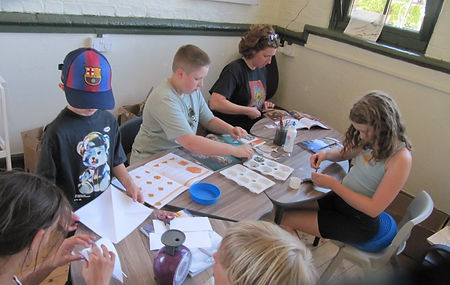
A typical day balances predictable rhythms (arrivals, check‑ins, shared meals, closing circle) with flexible time for child-led and self-directed projects, outdoor time and small‑group workshops. Children may choose from invitations such as art, nature exploration, tinkering, reading corners or collaborative projects, with adult coaches available as guides and co‑learners.
How do children learn reading, writing and maths without traditional lessons?
Literacy and numeracy are integrated into meaningful contexts such as projects, real‑life problem‑solving, games and individual coaching. This ignites the children's intrinsic motivation to master new skills, leading to swifter more enjoyable learning. Where needed, one‑to‑one or very small‑group support helps children who want or need explicit instruction in particular skills.
Is Cultivate a Forest School?
Cultivate is a nature-centred progressive school rather than a standalone forest school provider. Families searching for a forest school near Tring often find that Cultivate offers the same outdoor, child-centred values as part of a broader educational experience.
How do you support neurodivergent children or those with additional needs?
Small group sizes, consistent adults and a flexible environment allow for adaptations for sensory, social and cognitive needs. The focus is on relationship, regulation and strengths, with behaviour seen as communication rather than something to be controlled through punishments or rewards. Whilst we are not a 'special school' in the regulatory sense, the reality is that the way we operate is beneficial for all children, whether they have a diagnosis or not.
Wellbeing, Behaviour and Social
What is your approach to behaviour and boundaries?
Cultivate uses a trauma-informed, non‑punitive, relationship‑based empathic approach grounded in clear agreements, collaborative problem‑solving and emotional coaching. Limits are held around safety and dignity; children are supported to repair, reflect and learn rather than being shamed or excluded.
Will my child make friends in such a small setting?
Smaller communities often make it easier to build deep, lasting friendships because children see the same peers and adults regularly and are known well. Surprising as it may seem, children are naturally suited to having friends who are older and younger than them, though the conventional age-segregated school system, has conditioned us to expect otherwise. Mixed‑age groups create more opportunities for mentoring, leadership and inclusive play than strictly age‑segregated classes.
How do you handle bullying or unkind behaviour?
Being an empathic setting, we seek always to understand and support understanding between our community. We ask that all children joining us are willing to adopt this approach in their interactions with others, and it underpins our daily interactions. Rather than labelling behaviours as 'unkind', we'll work with children to understand the root cause and support them to feel more positively about others. We identify tensions early, and support meaningful reconciliation and understanding between children, building a deep sense of belonging and connection, which effectively prevents bullying from developing. The high ratio of adults to children and the mixed age groups also support the elimination of behaviours like this. We have clear processes to guide us, including close communication with families, in the event that problems should develop.
Practicalities and Logistics
Are you a school or a learning community, and how does that affect us legally?
Initially we will be seeking to register as a childcare setting with Ofsted. This means that we can initially only operate from Monday through to Wednesday, and parents whose children join us on this basis will either need to register as home educating, or have their child attend during 'flexi' school days whilst remaining on their existing school roll. Once we have registered as a school we will be able to accept children on a full-time basis. We anticipate this will be from September or October 2026 onwards.
Do you offer full‑time, part‑time or flexi‑schooling?
Like many micro schools, we offer a mix of full‑time and part‑time places, depending on capacity. From April until we register as a school, we'll only be able places for up to 3 days a week. Children who join us 4 or 5 days a week will be officiall on our school roll. Children attending less than this will need to be registered on the roll of another school or de-registered from school and home educated. In the latter case we would then form a part of the 'suitable education' which parents are obliged to provide when they elect to home educate. You can find out more information about home educating at educationotherwise.org.uk
What are your fees and do you offer bursaries or means‑tested places?
You can view our Part-Time Fees on the Fees page of our website. We also have estimates of our Full-Time Fees, though as we are still finalising our team of coaches for when we register as a school, these will likely be finalised during the summer. When we have over 18 children attending, we will be in a position to consider offering discounted or bursary places, on a means-tested basis. We will use a third party provider to support with this.
What are your hours and term dates?
We'll operate from 9.40am until 3.30pm, Monday through to Wednesday, extending to 5 days a week, 45 weeks a year, once we are registered as an independent school. The 7 weeks of closure each year will be communicated prior to the start of each academic year, and will likely include a mixture of short breaks with some being inside and others being outside of school holidays. As we are open substantially more weeks than state (39 weeks) and independent schools (c36 weeks), we are able to permit family holidays and breaks in addition to the weeks when we are closed.
Do you provide meals, transport or wraparound care?
We ask children to bring in a packed lunch and savoury snacks, with no added sugar foods or fruit juices, as these tend to impact focus in the afternoons. Alternatively, Daisy Chain Cafe next door offer some freshly prepared hot meal options as well as fruit and veg smoothies. We will have available each day a range of organic vegetables for additional healthy snacks. If you are interested in wraparound care, please let us know and we can consider offering this in response to demand. We do not provide transport. On-street parking is available to support drop-off and pick-up.
Where are you based?
We're based near Tring, in the village of Ivinghoe, and serve families from Berkhamsted, Chesham, Amersham, Aylesbury, Leighton Buzzard, Whipsnade and Aylesbury, though some families travel to us from as far as North London (which is workable as the adjacent Daisy Chain Cafe, provides a pleasant venue for remote working)